
US government-linked wallets moved over $1 billion in Bitcoin on Oct. 8 as BTC prices fell and more coins reached Coinbase Prime.
On Oct. 8, Galaxy Research flagged the transfer of 12,267 BTC, valued at approximately $1 billion, from a government-controlled address holding assets recovered from the 2016 Bitfinex hack.
The Bitcoin initially moved to an unidentified intermediary wallet before blockchain analyst EmberCN reported that 9,000 BTC, worth about $739 million, had reached Coinbase Prime, Coinbase’s institutional trading and custody platform.
The transactions extended three consecutive days of government-linked Bitcoin movements, coinciding with a roughly $4,000 decline in the cryptocurrency’s price. During the period, Bitcoin’s price fell from about $86,500 when the transfers began late on Oct. 6 to around $82,500 on Thursday, according to EmberCN.
Meanwhile, the timing has renewed concerns about potential government selling.
However, transfers to Coinbase Prime do not prove the Bitcoin was liquidated or that the transactions contributed to the price decline. The platform provides custody and trading services, allowing assets to be deposited without an immediate sale.
Government transfers expose previously unidentified Bitcoin holdings
The Oct. 8 movement followed substantial transfers that Galaxy Research had documented over the preceding two days.
On Oct. 7, the firm reported that government-linked wallets sent approximately 8,428 BTC to Coinbase Prime, following another 834 BTC the previous day. Together, those transactions involved about 9,261 BTC, valued at roughly $770 million.
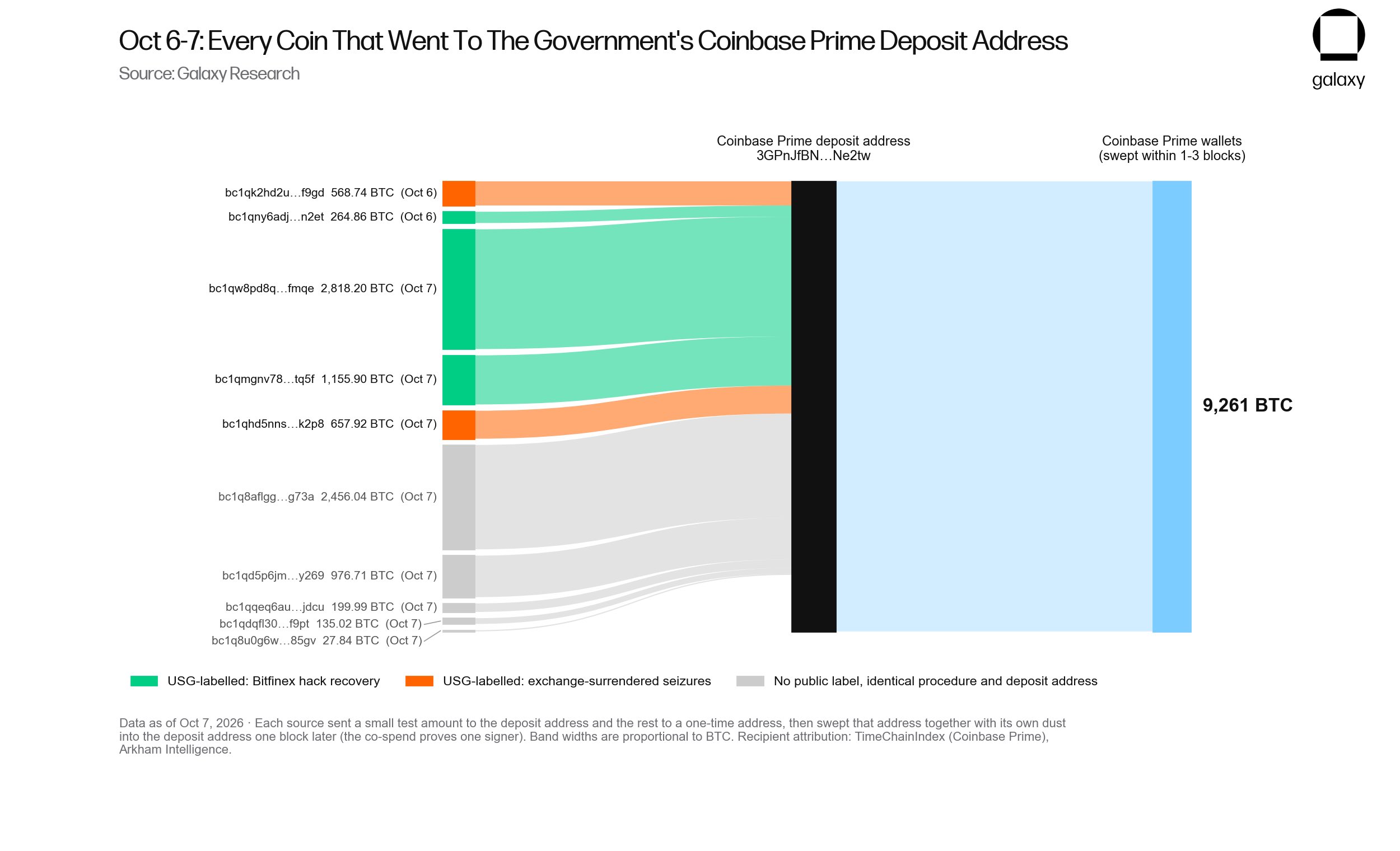
Nearly half of those assets originated from Bitcoin recovered following the Bitfinex hack, while another portion was linked to previously identified cryptocurrency seizures involving Binance.
However, Galaxy’s analysis also identified 2,456 BTC originating from wallets not previously classified as government holdings.
The researchers attributed those assets to US authorities because they followed the same transfer procedures as known government wallets and reached an identified federal Coinbase Prime deposit address.
The discovery suggests that publicly labeled government wallets may understate how much Bitcoin Washington controls.
Galaxy said the Coinbase Prime deposit address had received approximately 11,567 BTC since its first recorded use in December 2025. About 6,406 BTC came from identified government wallets, while another 5,160 BTC originated from previously unlabeled addresses.
The firm also classified the Oct. 7 activity as the ninth-largest single-day Bitcoin outflow from identified US government wallets since 2013, excluding internal transfers, and the largest since Dec. 2, 2024.
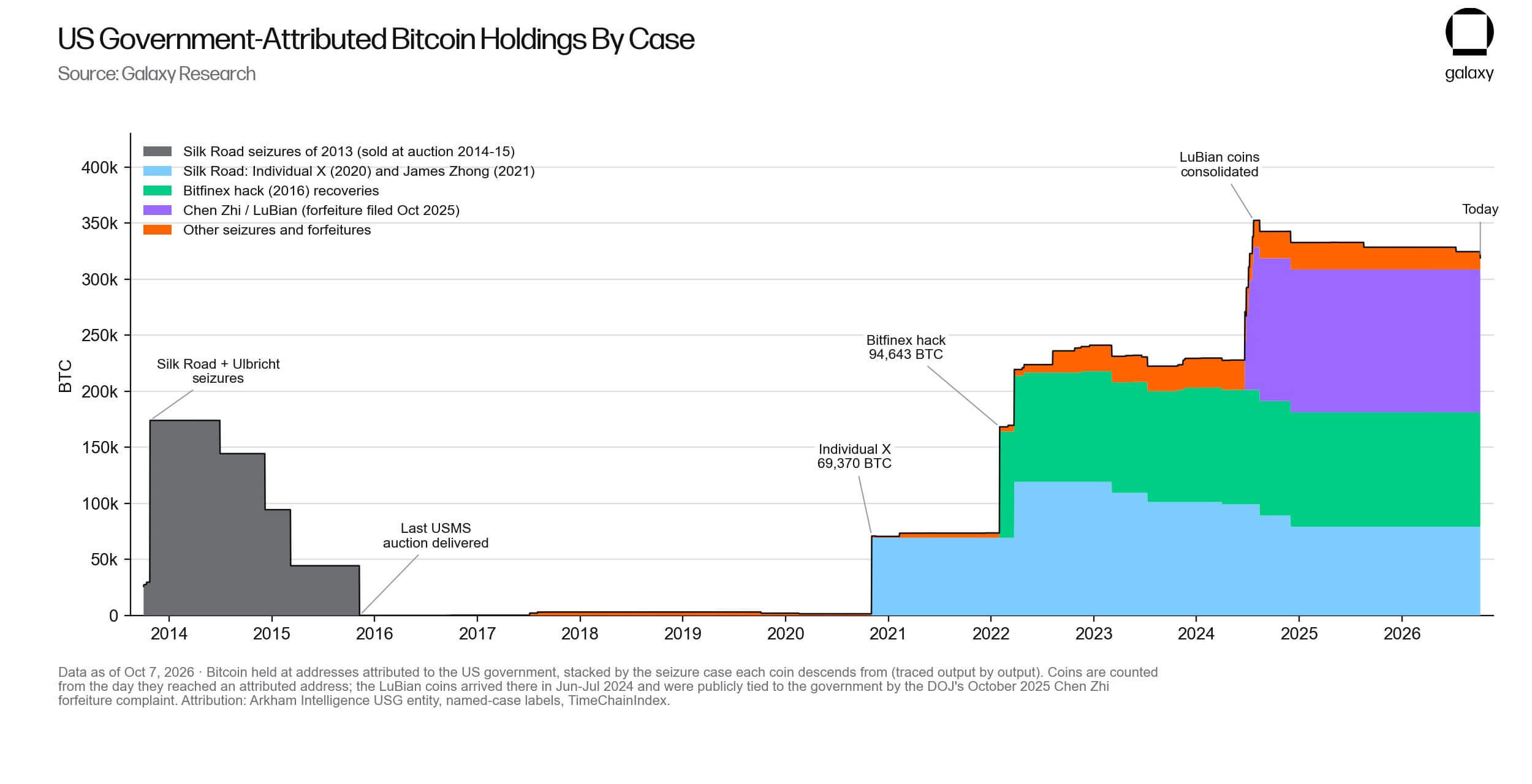
Galaxy estimated that government-attributed wallets held approximately 319,086 BTC in its earlier assessment, down from a peak of 352,587 BTC in August 2024.
The latest movements add to a series of transactions that have raised questions about Washington’s cryptocurrency management practices.
As CryptoSlate previously reported, government-linked wallets had already moved about $470 million in seized digital assets to likely Coinbase Prime addresses, including funds tied to the Bitfinex hack and Alameda Research.
Bitfinex ownership dispute complicates Bitcoin reserve policy
The origin of the latest Bitcoin transfers adds another complication: some of Washington’s largest cryptocurrency holdings remain tied to legal proceedings that could ultimately determine whether the government retains them.
Galaxy identified two particularly significant asset groups in its estimate of the government’s holdings.
The first consists of approximately 94,643 BTC held in a principal wallet containing assets recovered from the Bitfinex hack. The second involves roughly 127,271 BTC associated with LuBian and Cambodian businessman Chen Zhi.
The Justice Department filed a civil forfeiture complaint in October 2025 seeking to permanently confiscate Bitcoin allegedly connected to cryptocurrency fraud and money laundering.
Together, the two groups represent more than 66% of the government’s previously estimated holdings, although their legal status differs from Bitcoin definitively available for federal reserve purposes.
The Bitfinex recovery has faced competing ownership claims.
Federal prosecutors initially proposed returning recovered Bitcoin to the exchange through in-kind restitution. However, an April 2025 federal court ruling awarded Bitfinex no direct restitution in the criminal proceedings and directed competing claims over the forfeited assets into a separate ancillary proceeding.
Some former Bitfinex customers have asserted ownership claims against portions of the recovered cryptocurrency, challenging the exchange’s entitlement to the full amount.
Galaxy said the principal Bitfinex recovery wallet, which holds about 94,643 BTC, remained untouched as of its assessment, leaving the latest movement involving another recovery address to be evaluated separately.
The dispute carries implications for President Donald Trump’s Strategic Bitcoin Reserve.
Under the March 2025 executive order, Bitcoin finally forfeited to the government and meeting specified eligibility requirements can be transferred into the reserve, where it generally cannot be sold.
The order nevertheless permits certain disposals required by courts or law, including transfers involving verified crime victims and other specified forfeiture obligations.
That distinction means a government-controlled Bitcoin wallet is not automatically treated as part of the Strategic Bitcoin Reserve.
A confirmed sale of qualifying reserve assets outside the order’s permitted exceptions would raise questions about compliance with the administration’s policy. Transfers made to satisfy legitimate restitution or forfeiture obligations would carry different legal implications.
For the recovered Bitfinex assets, ownership proceedings could determine whether successful claimants receive substantial quantities of Bitcoin or the government retains them.
Meanwhile, where the remaining 3,267 BTC from Thursday’s reported movement go, and how the government treats assets already deposited at Coinbase Prime, could provide further evidence of Washington’s immediate intentions.
Any subsequent disposal would also renew scrutiny of how federal agencies classify recovered Bitcoin, particularly when assets held in government wallets remain subject to competing claims rather than being available for permanent retention in the reserve.
The post US government moves another $1 billion in Bitcoin as BTC slides $4,000 appeared first on CryptoSlate.